Put a ruler next to a pencil and read the scale from directly above it. Move your head left and right without moving the ruler or the pencil. The pencil seems to cross different lines on the scale although neither the ruler nor the pencil has been moved. This effect is parallax and it can affect readings taken from rulers, dial indicators, graduated cylinders, thermometers, and many other analog scales.
Parallax is produced when the scale, needle, liquid level or measured object is viewed from an angle. The eye is no longer looking through the indication and the true graduation at the same time. Since the pointer and the scale are often in different planes, changing the viewing angle shifts where the two seem to line up. The effect may be quite small but can become a concern when the graduations are close together or when the measurement requires a tight tolerance.
The ideal viewing position varies with the instrument. For a ruler, the eye should be directly above the point where the object crosses the scale. For a dial indicator, look squarely at the face of the gauge so that the needle does not appear to move relative to the graduations. To read a liquid level, bring the eye to the height of the meniscus, not above it. Some analog dials include a mirror to aid the reader; the correct viewing angle is achieved when the needle and its reflection appear to coincide.
Some inexperienced readers become very focused on estimating which division to choose and fail to realize that parallax is affecting their results. This can lead to erratic results even though the object and instrument have not been moved. In addition, a consistent bias will be introduced if every reading is taken from the same side of the scale. The result may appear repeatable but will differ from the value observed at the correct viewing position.
A simple exercise is to take three readings of the same division. Read the value from the left side, then from directly above and finally from the right side. Keep the ruler and object stationary during the trial. Note the values, including units, and calculate the difference between the side readings and the overhead reading. The experiment can be repeated for different subdivisions if appropriate. As the graduation size decreases the effect of parallax increases.
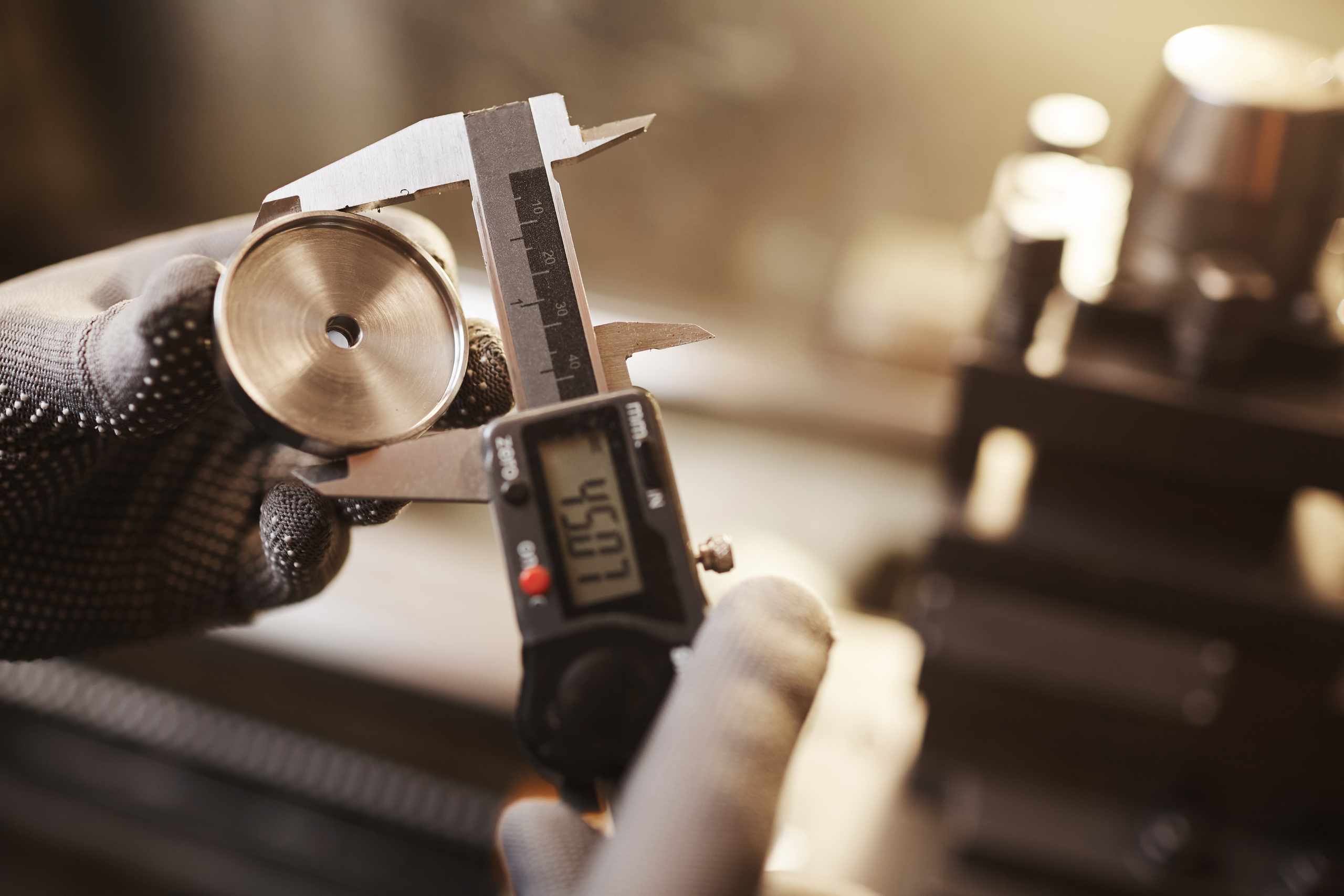
Steps taken when setting up the instrument can minimize the chance of introducing parallax before taking the reading. Place the scale adjacent to the measured feature, ensure that the instrument is stable and increase the light source so the graduations and indication are clearly visible. Shadows cast by the measuring object can obscure the exact location. Where possible, provide supports for the object so it does not need to be held in place while also allowing the reader to view the scale. A digital readout does not suffer from parallax errors although zero error, incorrect alignment and excessive pressure may still occur.
When ready to record an analog reading, take a moment to shift your head to the left and right. Does the indication move relative to the graduations? If so, shift your head until the indication is no longer shifting. This short procedure distinguishes between an accurate measurement and a value determined only by the position of the observer.